

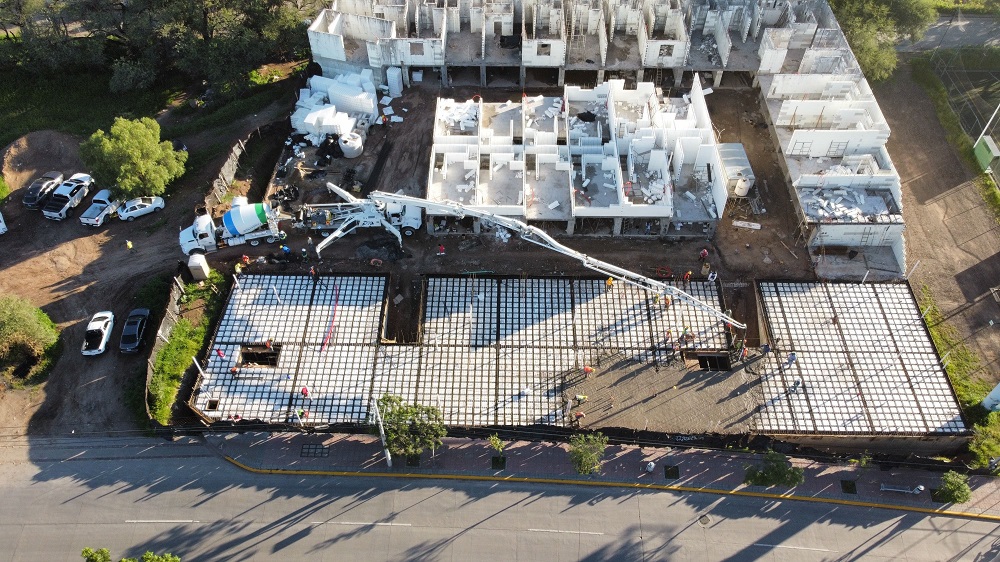
Construction projects often need materials that can provide support without adding unnecessary weight to the structure or surrounding ground. This can be especially important when working on soft soils, slopes, roads, and areas where existing conditions make traditional fill materials less practical. EPS geofoam blocks offer a lightweight alternative that can be incorporated into different construction applications. Their low density and ease of handling make them useful for projects that require controlled loading and efficient installation. From roadway improvements to structural landscaping, the material can serve several practical purposes. Understanding where EPS geofoam blocks fit can help project teams identify applications where reducing fill weight may be beneficial.
Roadway and Highway Construction
Roadway projects often involve areas where heavy soil or aggregate fill could place additional stress on the underlying ground. EPS geofoam blocks can be used as lightweight fill beneath roads to reduce the load placed on weak or compressible soils. This can be particularly useful when building up road elevations without adding significant weight to the foundation soil.
The blocks can also help create a more predictable fill profile during construction. Their relatively simple installation can make it easier to build up large sections of roadway efficiently. Proper drainage and protective layers are still important parts of the overall road design. When incorporated according to project requirements, geofoam can provide a practical approach to managing fill weight.
Bridge Approach Construction
Bridge approaches can experience settlement when different materials beneath the roadway respond differently to loading and soil conditions. Using lightweight geofoam as part of the approach fill can reduce the amount of additional load transferred to the underlying soil. This may help address settlement concerns in areas with weak or compressible ground.
The blocks can be arranged to create the required elevation while keeping the fill system relatively lightweight. They can also be cut and positioned to accommodate the geometry of the project. This flexibility can make them suitable for approach areas with specific grading requirements.
A properly designed system can provide a stable base for the layers installed above the geofoam. Using lightweight fill near bridge structures can also help engineers manage the effects of additional loading on the surrounding ground. This makes EPS geofoam a practical option for certain bridge approach applications.
Slope Stabilization
Adding heavy fill to a slope can increase the forces acting on the underlying soil and potentially affect slope stability. EPS geofoam blocks provide a way to achieve the required grade while introducing much less weight than conventional soil fill. This makes them useful for certain slope reconstruction and stabilization applications. The blocks can be placed in planned layers to create the desired profile.
Protective systems may then be added to help shield the material from environmental and construction-related conditions. Engineering evaluation remains important because slope behavior depends on factors such as soil properties, drainage, geometry, and existing loads. When these factors are properly considered, lightweight fill can become part of a broader strategy for managing slope conditions.
Retaining Wall Backfill
The material placed behind a retaining wall can have a significant effect on the pressure applied to the structure. EPS geofoam can be used as lightweight backfill to reduce the vertical and lateral loading associated with conventional fill materials. This can be helpful when a retaining wall is being built near existing structures or in areas with challenging soil conditions. The blocks can be installed in a planned configuration behind the wall to achieve the required finished elevation. Drainage details and separation layers need to be incorporated into the design as appropriate. Engineers also need to consider the loads that will be placed above the backfill system. With the right design approach, geofoam can help address loading considerations while supporting the intended grade.
Parking Areas and Site Grading
Parking lots and other paved areas sometimes need to be raised over existing ground without introducing a large amount of additional weight. EPS geofoam blocks can provide lightweight fill for these grading applications. They can help create elevation changes while reducing the amount of conventional fill required. This can be useful on sites with soft soils, buried structures, or other conditions where controlling loads is important. The blocks can be arranged to match the planned contours before the pavement system is installed above them. Construction teams can also handle the material without the same equipment requirements associated with moving large quantities of heavy fill.
Landscaping and Architectural Features
Geofoam is not limited to transportation and structural applications. It can also be used to create lightweight shapes for landscaping features, raised planting areas, terraces, berms, and other architectural elements. Traditional soil and masonry materials can become quite heavy when used to build large elevated features. EPS geofoam blocks can provide the underlying form while keeping the overall weight lower. They can be shaped or arranged to create slopes and design features. Additional materials can then be installed over the geofoam to provide the desired finished appearance. This gives designers more flexibility when creating elevated landscape features around buildings and other developed spaces.
Void Filling and Elevation Changes
Some construction sites contain voids, uneven areas, or spaces where conventional fill would be difficult or inefficient to place. EPS geofoam blocks can be used in certain applications to fill these areas while limiting the amount of weight added to the site. They can also help create planned elevation changes without requiring thick layers of traditional fill. Because the blocks are manufactured in controlled dimensions, they can be arranged to suit the geometry of the space.
EPS geofoam blocks that comply with ASTM D6817 can also be specified when project requirements call for materials meeting established industry standards. This can make installation more straightforward in locations with restricted access or unusual shapes. The surrounding construction system still needs to provide suitable protection and support for the intended use. Project-specific engineering is important to determine the appropriate configuration and protective measures.
Final Thoughts
EPS geofoam blocks can serve several practical purposes when a construction project needs lightweight fill or controlled elevation changes. Their applications range from roadways and bridge approaches to retaining walls, parking areas, slopes, and landscaping features. The main advantage is the ability to achieve specific grades or forms without adding the same amount of weight associated with conventional fill. This can be especially useful when ground conditions make additional loading a concern.
At the same time, geofoam is only one part of a complete construction system and needs to be evaluated alongside site and structural requirements. With careful planning and proper engineering, EPS geofoam can be a practical material for a variety of modern construction projects.